The History of Louis Levin & Son, Inc.
By Robert Levin


By Robert Levin
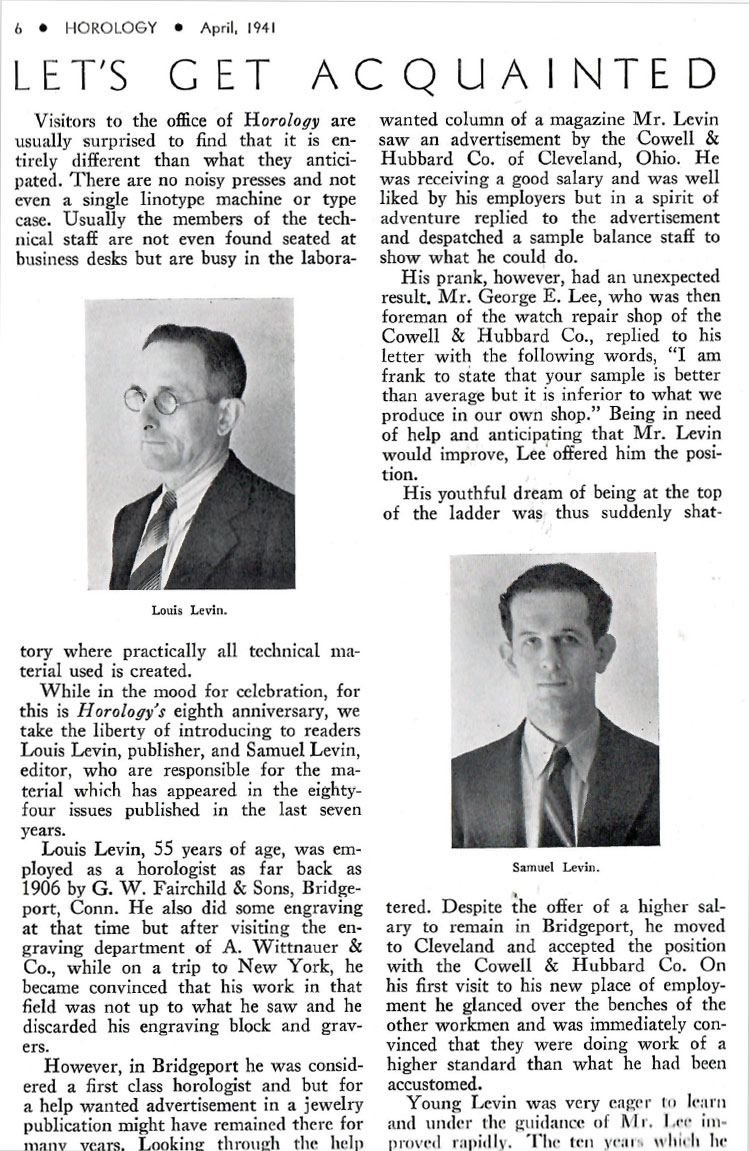
Louis Levin was born in Russia in 1886. As a young man in Russia, he had been apprenticed to a watchmaker to learn the trade, which, at that time, included learning how to repair watches and clocks and how to do fine engraving. By the time he was 18 years old, he concluded that he had learned as much as he could from his teacher and decided to emigrate to the United States. Arriving in New York, he was fortunate to quickly obtain employment at some of the fine jewelry shops where highly skilled watchmakers were on the staff.
By 1906 he was employed by G. W. Fairchild & Sons in Bridgeport, Connecticut as a horologist. He also did some engraving at that time; but after seeing the class of engraving being done at A. Wittnauer & Company in New York, he gave up all thought of becoming a first rate engraver. Later, after seeing a help wanted advertisement by Cowell & Hubbard Company of Cleveland, Ohio he responded to the ad and enclosed a sample balance staff to indicate how highly skilled he was. The foreman of their watch repair shop replied by letter, telling him: “I am frank to state that your sample is better than average but it is inferior to what we produce in our own shop. ” However, the repair shop was in need of additional watchmakers and the foreman offered him a position, one which he accepted even though it meant a cut in his salary.
There, under the guidance of Mr. George E. Lee, the foreman of the watch shop, he improved his horological education and skills by being able to associate with two outstanding technicians at the Webb C. Ball, Company, Mr. A. F. Abel and Mr. L. N. Cobb. In the ten years Louis spent working in Cleveland, he took full advantage of the wonderful opportunity to learn from his association with some of the finest technicians in the country. In so doing, he constantly improved his horological skills, and was on his way to becoming an exceptionally skilled horologist and mechanic. His son, Samuel was born in New York City in 1907 and his daughter Ann was born in Bridgeport, Connecticut in 1910. Both children would later hold important positions within Louis Levin & Son, Inc.
In 1920, Louis moved his family to Los Angeles where he opened his own watch repair business at 747 South Hill Street. It was here, in Los Angeles, that Sam received his early horological training while still a student at Hollywood High School. Already an expert draftsman before starting his horological education, Sam went into his new studies with enthusiasm for both the theoretical and practical aspects of watch repairing. His drafting skills and his ability to visualize complex mechanisms were to become major assets for the fledgling firm. By 1923, Louis Levin had become a well known and well respected horologist in Los Angeles and his reputation was spreading.
In 1923, he organized a mass certification examination for watchmakers by the Horological Institute of America. This was one of the largest groups to have ever taken the Horological Institute of America test and Louis was one of those taking the test. The following year, Samuel graduated from Hollywood High School in Los Angeles. He then completed his Watchmaker Apprenticeship training under the critical and exacting supervision of his father. Though he continued to successfully follow watchmaking for a few years, his real interests and talent were in the areas of mechanical design, the manufacture of timing mechanisms, and the making of duplicate parts for watches and intricate precision tools.
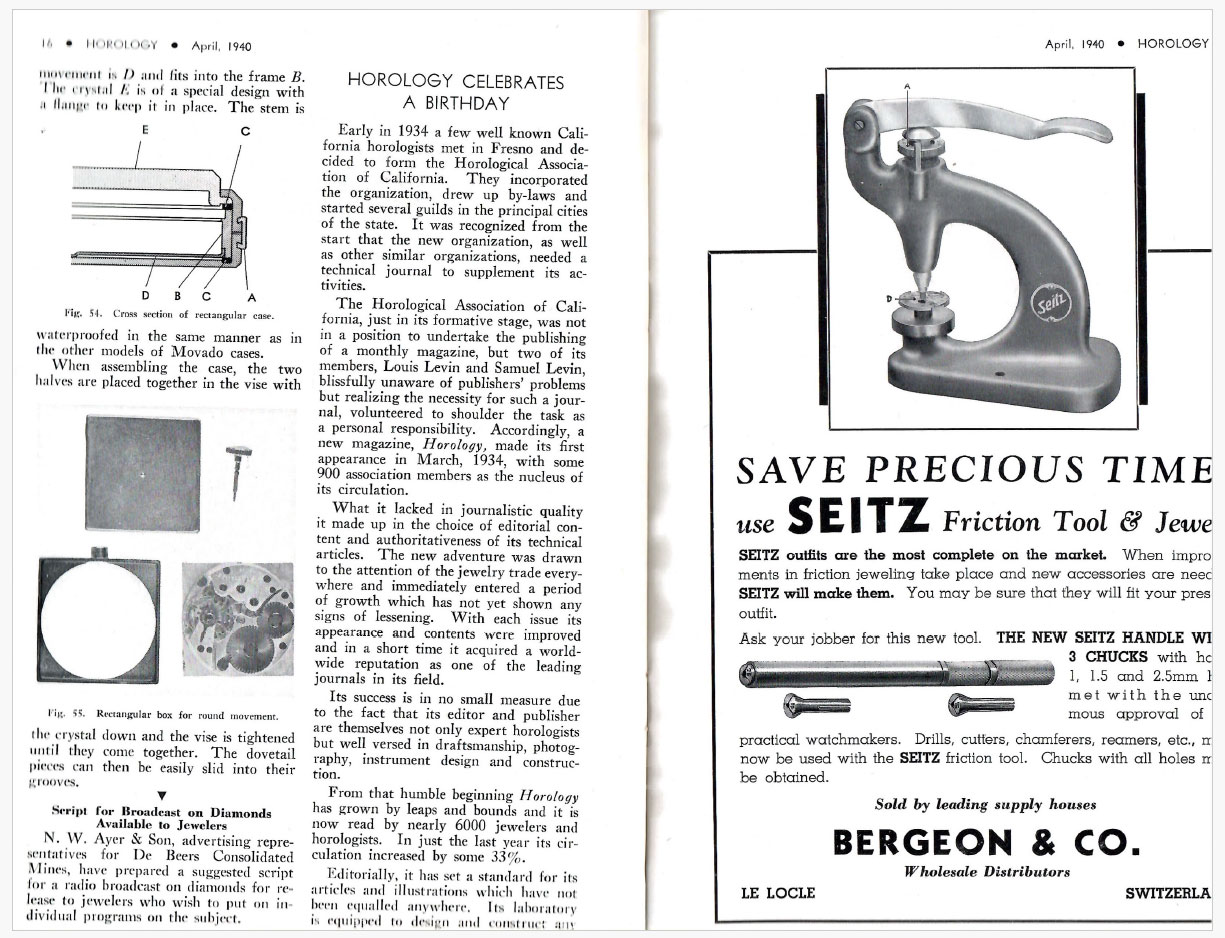
In cooperation with Harold Gatty, the navigator on the famous Wiley Post – Harold Gatty round-the-world flight of 1931, Samuel Levin designed the Ground Speed Indicator (GSI) used by these aviators. The Levins also manufactured that device as well as preparing the special navigational watches used by Gatty. Subsequently, a number of these GSI’s were constructed and used by the U.S. Army and Navy while others were sent abroad. The one used on the 1931 flight was presented to the Smithsonian Institution. By 1932, Samuel had become a partner in the business. From the beginning, these two men demanded of themselves the nearest thing to perfection in all of their work. Their knowledge, expertise and mechanical skills were widely recognized and they contributed greatly to the national effort to establish and raise the standards for the profession of Horologist throughout the United States. In 1934, Louis and Samuel became active in the newly formed Horological Association of California, with Samuel Levin becoming the Secretary of the Los Angeles Guild. In an article published in the April, 1940 issue of Horology magazine, Samuel Levin, editor of the magazine, recounts the history of Horology magazine as follows:
Early in 1934 a few well known California horologists met in Fresno, California and decided to form the Horological Association of California. They incorporated the organization, drew up by-laws and started several guilds in the principal cities of the state. It was recognized from the start that the new organization, as well as other similar organizations, needed a technical journal to supplement its activities.
The Horological Association of California, just in its formative stage, was not in a position to undertake the publishing of a monthly magazine, but two of its members, Louis Levin and Samuel Levin blissfully unaware of publishers ‘problems but realizing the necessity for such a journal, volunteered to shoulder the task as a personal responsibility. Accordingly, a new magazine, Horology, made its first appearance in March, 1934, with some 900 association members as the nucleus of its circulation.
What it lacked in journalistic quality it made up in the choice of editorial content and authoritativeness of its technical articles. The new adventure was drawn to the attention of the jewelry trade everywhere and immediately entered a period of growth which has not yet shown any signs of lessening. With each issue its appearance and contents were improved and in a short time it acquired a worldwide reputation as one of the leading journals in its field.
Its success is in no small measure due to the fact that its editor and publisher are themselves not only expert horologists but well versed in draftsmanship, photography, instrument design and construction.
From that humble beginning Horology has grown by leaps and bounds and it is now read by nearly 6000 jewelers and horologists. In just the last year its circulation increased by some 33%.
Editorially, it has set a standard for its articles and illustrations which have not been equalled anywhere. Its laboratory is equipped to design and construct any type of horological equipment and has done considerable pioneering in the photography of small objects such as shown in many of its illustrations.
From the start it was realized that in order to be of the greatest service to the jewelry trade, the advertisements appearing in Horology must be such as would merit the full confidence of readers. Thus, a strict policy regarding advertising was adopted and no advertisement was accepted unless it was felt that the claims made for the product or service advertised could be substantiated. This policy has been reflected in the expressed appreciation of readers and has in turn benefited the advertisers themselves by stimulating sales.
It is a fact, vouched for by many dealers, that Horology’s technical articles and strict supervision of advertising has created the greatest demand for tools to be known in years. As for the advertisers themselves, their appreciation has been shown by the continuous use of space in Horology. In this very issue, for example are the advertisements of fifteen firms who have been using space regularly since the first year. Horology thanks its many friends in the jewelry trade and pledges itself to a continued policy of service.”
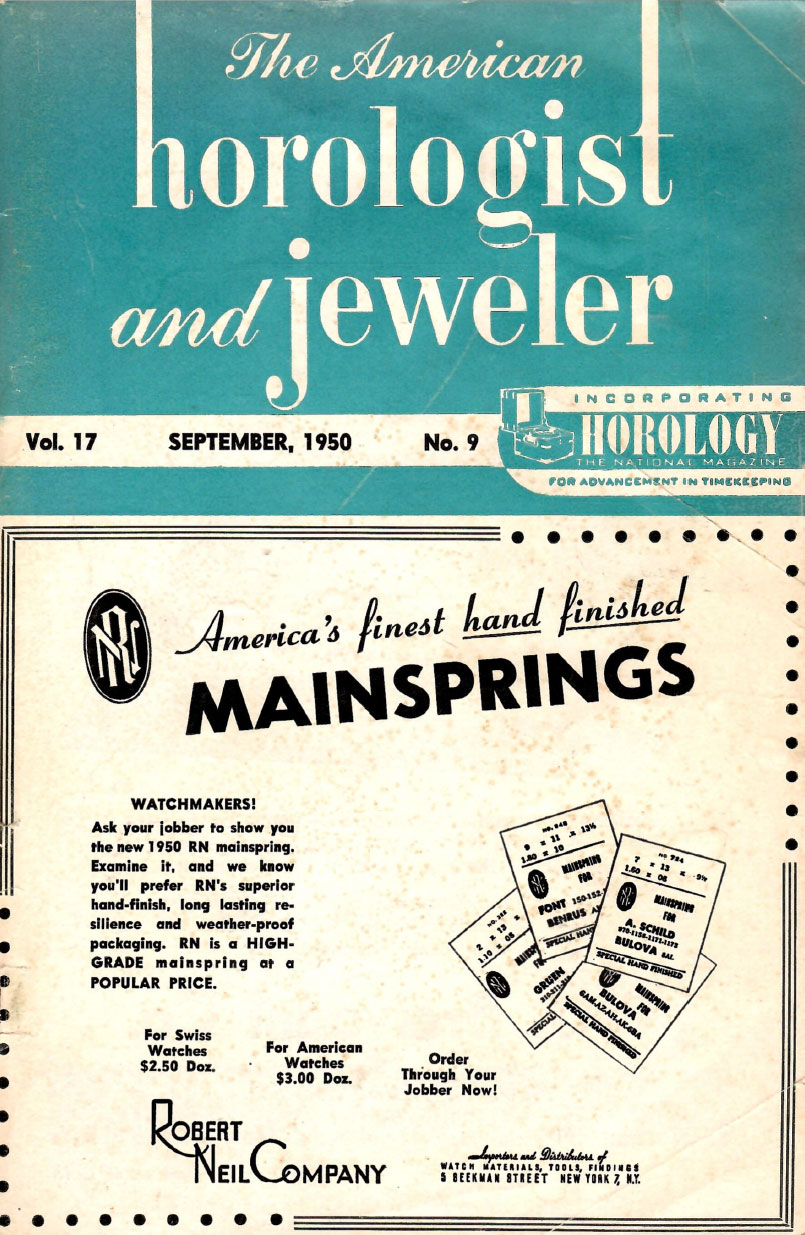
Horology was the official organ of the Horological Association of California and, within a few years, it became the official organ of a number of other Horological Associations and Horological Societies throughout the United States. Louis Levin was Advertising Manager for the publication and Samuel Levin was the Editor. Horology went on to become known to virtually every American watchmaker and horologist as well as to a great many such specialists overseas. It was published continuously by the Levins until 1941 when it was merged with another horological publication, the American Horologist & Jeweler. 1930 ushered in the next generation with the birth of Sylvia Freedman to Ann and William Freedman. Ann, Samuel’s younger sister and William would later go on to work in the Jewel Bearing manufacturing department of the company during World War II. For a number of years in the early 1960’s, Ann would return to the firm in an executive and administrative capacity.
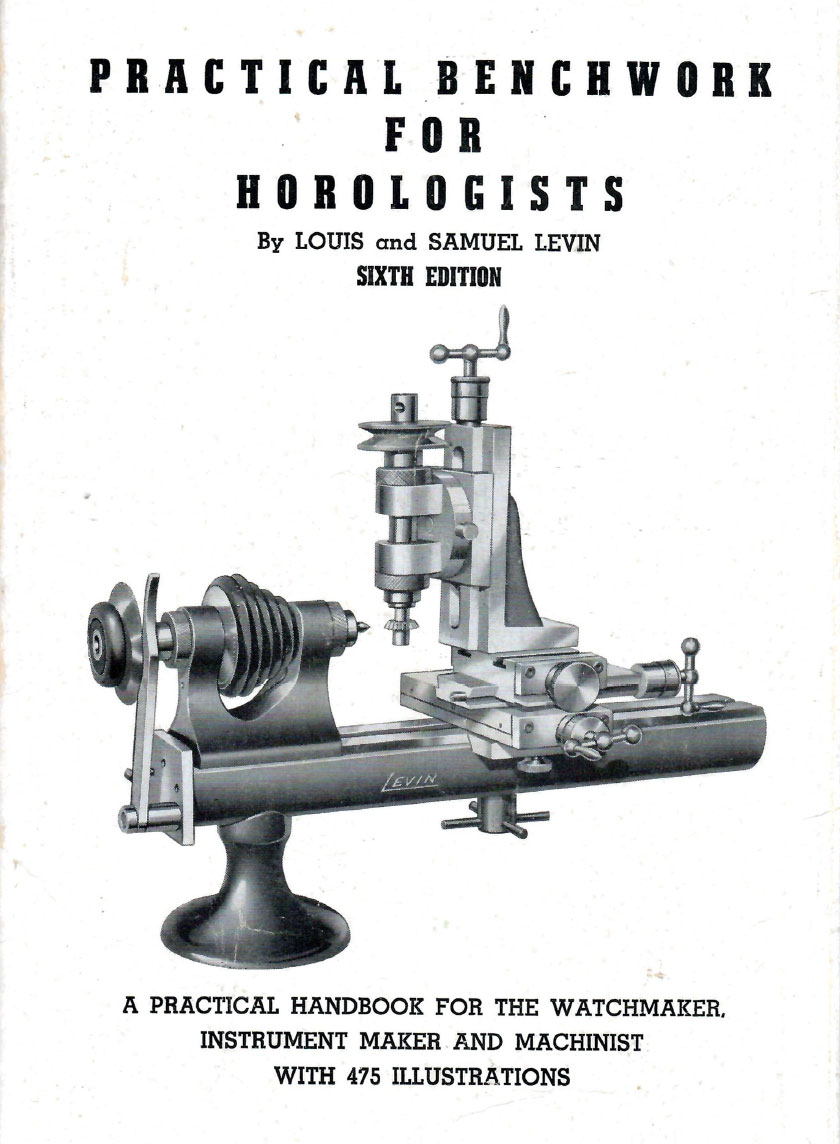
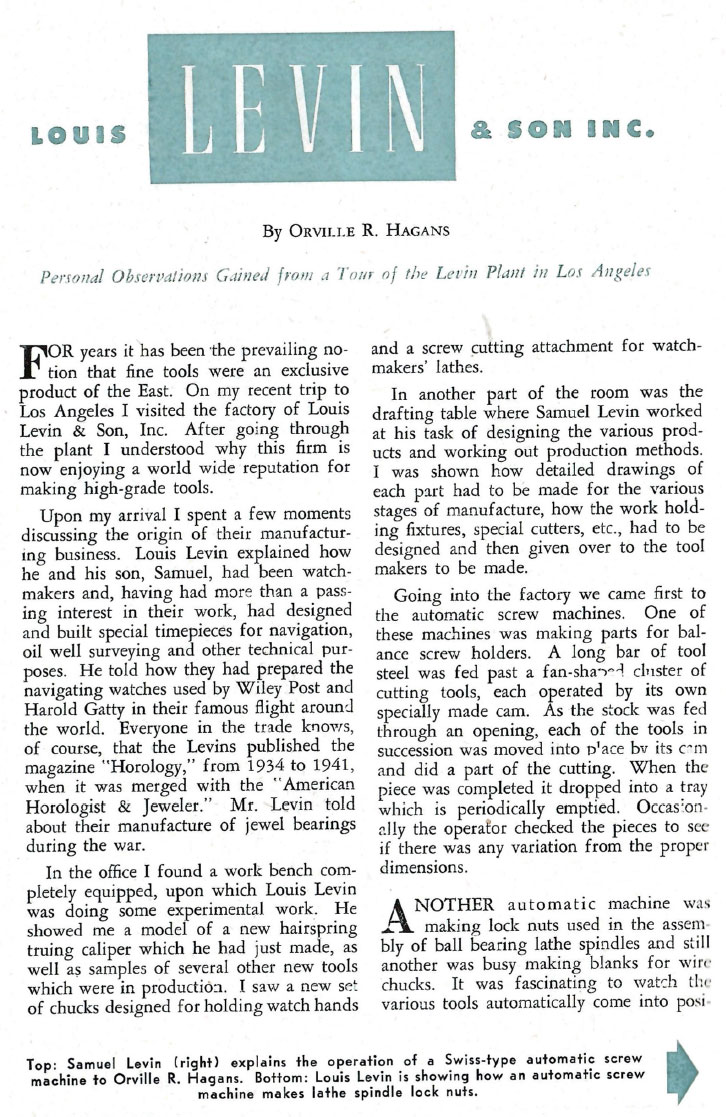
In 1938 Louis and Samuel Levin published “Practical Benchwork for Horologists”, which they considered essential for all horologists. The book contained hundreds of drawings and photographs, most of which were produced by the Levins. Starting in the early 1930’s, Louis and Samuel Levin started manufacturing a number of high quality jewelers’ tools and the two men were active in research which produced the watch rate recorder. The Los Angeles Times reported that “when Howard Hughes was assembling his navigational instruments for his recent world-girdling flight, he sent Lieut. Thomas Thurlow, one of the navigators, to the Levins for a special sextant.” By now, Louis and Samuel Levin had become very well known for their engineering, technical design capability, manufacturing skills and their extremely high quality of workmanship. Their services were sought for the repair and service of rare timepieces as well as entire watch collections. They were also employed to maintain, service and regulate the clocks used to drive the 100 inch telescope atop Mount Wilson in the San Gabriel Mountains of Southern California.
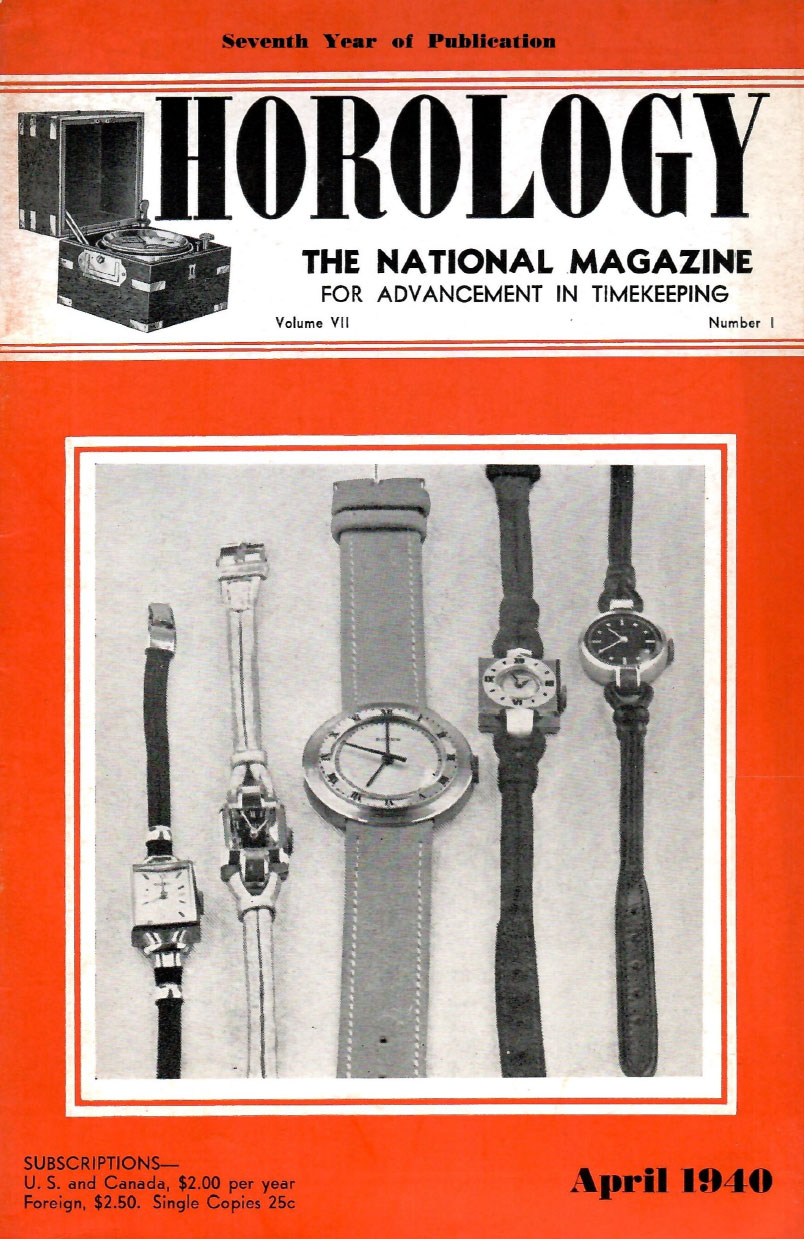
In 1941, the Army and Navy Munitions Board asked Louis Levin if he would be willing and able to establish a factory on the West Coast for the production of critically needed sapphire jewel bearings. This was to be one of the five such jewel bearing manufacturing plants to be established in the United States. The specialized equipment required for this undertaking and the specialized manufacturing know how was to be provided to the company by the Government. Louis Levin agreed to expand his business and create a manufacturing facility in Los Angeles that would produce finished sapphire jewel bearings for the Navy. In 1942, Louis Levin and Son, Inc. established a new factory in Los Angeles near the intersection of Beverly Boulevard and Alvarado. At the time the contract was signed, neither Louis nor Samuel Levin actually knew how to mass produce sapphire jewel bearings. They were operating under the belief that both the equipment and instructions they were to receive from the Government would be sufficient to enable them to proceed. Unfortunately, neither the equipment nor the technical know how provided by the Government through its prime contractor was adequate for the task at hand. The Levins and their staff found it necessary to modify and improve both the manufacturing equipment provided by the Navy and the manufacturing process furnished by them. It took some time; but ultimately Louis Levin & Son, Inc. began shipping finished sapphire jewel bearings that were as good as those imported from the leading manufacturers in Switzerland. Louis Levin & Son, Inc. continued production of jewel bearings until “V-J Day”. It was during this period that three generations of family members were at work in the company. Sam’s sister Ann and her husband William Freedman went to work full time in the Jewell Bearing Department of the company. Their daughter, Sylvia, a young school aged child worked in the plant on a part time basis. Sam’s son Bob, also a school aged child, worked in the plant on a part time basis. These two grandchildren of Louis Levin, who had appeared together on the cover of the December 1939 issue of Horology were now spending their free time working for the war effort. After the war, a well illustrated description of the jewel bearing manufacturing process at the Levin factory was included in later editions of Louis and Samuel Levin’s book, Practical Benchwork For Horologists.
In an address before the Horological Association of California in late 1938, Samuel Levin presented a talk on “The Lathe and Its Use”. This talk was later reprinted in the December 1938 edition of Horology and includes numerous photographs and drawings made by Samuel Levin. As Horology began its sixth year of publication in April of 1939, it announced that it had attracted more than 5000 subscribers. In 1939 Louis Levin was awarded an honorary membership in the Horological Institute of America for his activities on behalf of that organization. Both Louis and Samuel continued to promote the goal of state licensing legislation for the profession of horology and for the establishment of appropriate standards and tests for those who wish to refer to themselves horologists. By this time the magazine stated that the name Horologist “is gradually becoming a recognized name for one who is an expert on timepieces”.
The two Levins designed and manufactured many special tools for their own use. Some were required to enable them to accurately replicate damaged or worn parts in rare timepieces entrusted to them for repair and service. Others were necessary for the production of parts for the many special devices and mechanisms they were engaged to manufacture, including specialized tools used by horologists for the repair of timepieces. Often these tools were carefully photographed and articles describing how to design manufacture and use them would appear in Horology. Louis and Samuel Levin made every effort to educate horologists throughout the country on how to make the best possible tools of their trade, how to use them, and how to take care of them. They also presented articles and gave talks on how to repair and regulate watches. Their writings and illustrations covering the design, use and care of the watchmaker’s lathe were so thorough and so complete as to have been incorporated in later books and manuals by other authors.
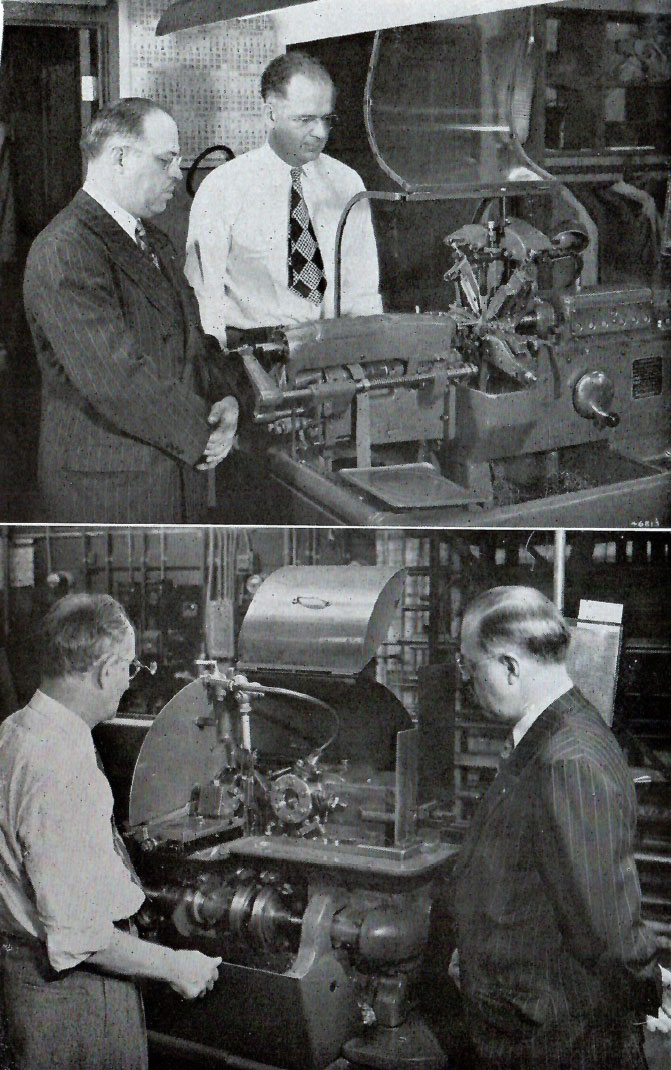
Over the years, the Louis Levin & Son designed and manufactured a wide variety of mechanisms, ranging in application from the control of one of the first automatic traffic signals in Los Angeles, a mechanical synchronizer for use in flash photography, a device which, when dropped down an oil well hole, recorded the direction of the hole and a mechanically powered trephine for use by ophthalmologists in cutting out a cork shaped section of a cornea during corneal transplant surgery. In order to publish their magazine, design and manufacture special mechanisms and repair time pieces, they needed to add considerable equipment to their downtown office of Horology. By 1940, their office was equipped with a nine inch engine lathe, a small milling machine with a dividing head, several watchmakers’ lathes, a watch rate recorder, a small offset printing press, a couple of typewriters, a microscope, and several cameras equipped with special adapters enabling them to photograph the smallest watch parts through their microscope. These special optical devices were designed and manufactured by them and used to take many of the remarkable pictures appearing in both Horology and Practical Benchwork For Horologists.
In 1939, Louis Levin presented a paper entitled “Practical Bench Work” at a meeting of the Horological Institute of America held at the National Academy of Science building in Washington D.C. By this time, Louis and Samuel Levin had learned a great deal about how to design and manufacture a great many of the tools needed for repairing watches and other small precision instruments and devices In fact, they were already manufacturing and selling some small tools for horologists and contemplating the manufacture of others. The June, 1939 issue of Horology included the following photograph of a “horologist’s lathe.” This lathe consisted of a Cone Bearing Headstock fitted with a Lever Collet Closer. Double Tool Cross Slide, and a 6-position self-indexing Turret Attachment. The lathe had a 12″ bed length. The turret, cross slide, and automatic collet closer were designed and manufactured by the staff of Horology in their laboratory.
In July, they published a photograph of a “horologist’s lathe” equipped with a Screw Cutting Attachment and a picture of a similar lathe equipped with a Spiral Milling Attachment. For the next several years, Horology continued to publish well illustrated articles describing how to design and manufacture and use a wide variety of horologists’ tools and lathe accessories.
By June of 1940, Horology was warning about the possible consequences of a German invasion of Switzerland and the need for horologists to be prepared to make parts which were previously imported from Switzerland. In that editorial, Samuel Levin said “While horologists can, if necessary, make a great many of the replacement parts ordinarily used, they cannot make such things as mainsprings or jewels and a shortage of these items would be felt seriously.”
World War II did, indeed, produce shortages of the tools used by horologists and instrument makers as the nation expanded its military and industrial capacity. Horologists and instrument makers now recognized the possibilities of productively using the tools of both trades. Watches and a host of different instruments shared common types of parts and similar mechanisms; but they also shared one absolutely indispensable item, the sapphire jewel bearing, a product whose primary source was then in Switzerland. The means of manufacturing sapphire jewel bearings had always been veiled in secrecy and the United States Government determined that it would establish five factories, spread throughout the U.S. to produce such bearings in the quality and quantities that might be required if supplies from Switzerland were cut off by Nazi Germany.
World War II created increased need for watchmakers’ lathes and tools. Since most such tools had been manufactured in Europe, the supply of such tools had now been severely curtailed. This gave Louis Levin & Son, Inc. the opportunity to begin producing a line of watchmaker’s lathes and tools. The first commercial lathes they produced were WW style machines with a 50 mm center height, a 12 in. bed length and a collet holding push type tailstock. The headstocks were available with either bronze or hard steel tapered cone bearings. These machines were produced during a time of material shortages and were not as well made as they could have been if the preferred materials and equipment had been available for this purpose. However, by 1948, the factory was producing a full line of tooling for their lathes including a full line of split collets and a variety of watchmakers hand tools.
Louis Levin & Son, Inc. expanded production of their line of watchmaker’s lathes and hand tools. During the war years, the Government, either directly or indirectly, purchased virtually all of the tools the factory could produce and for years to come, these fine tools were in great demand by horologists throughout the world because of their quality and precision. They became the standard against which such products were judged. After WW II, lathe and tool production increased and by 1956 the list of products being manufactured and stocked included more than 300 different items, all related to the manufacture and assembly of small watch sized precision parts. But by this time, it was evident that the demand by horologists for these tools would certainly diminish due to technological changes in the watchmaking industry. As watches became less expensive and their mechanisms became less mechanical and more electronic, the need for most of the products then being manufactured by Louis Levin & Son, Inc. would evaporate except for the few horologists able to find work repairing very expensive old watches. However, the same wave of technological change was also creating an increasing industrial demand for the tools needed to handle smaller and smaller parts. The Levins saw what appeared to be an increasing need to produce very small parts and an expanding market for the type of tools made by Louis Levin & Son, Inc. The company began to alter their machine designs to improve the performance and accuracy of its machine tools and accessories. These changes were required to accommodate new industrial requirements that were developing at an accelerating pace. The industrial demand grew rapidly, accelerated by the demands of the Korean War. In a period of about 15 years the demand for horologists tools had all but disappeared and was replaced by an increasingly large worldwide demand for the industrial versions of these products.
Sam Levin designed virtually every part produced in the factory, the manufacturing processes employed, and the tooling required for the production of each such part. A major exception to this was the collet production line. Here the credit goes to Louis Levin. Collet production was an extremely tricky process and it took some time to figure out how one could reliably produce extremely accurate collets on a production basis. Special machinery was required, a good deal of which, the factory had to design and build itself. It was Louis who determined what was needed and it was up to Sam to design the special equipment and the necessary modifications to the machines available for the collet production operation. Louis was never satisfied with the quality of the collets produced by the company, even though they were as good or better than any produced by their competitors. It wasn’t until 1954 that the factory achieved quality levels that satisfied Louis. Once that occurred, he directed that all collets produce prior to that time be removed from inventory, destroyed, and replaced with new product from current production. For years, thereafter, every time a collet was returned to the factory in the original package and was identified as having been produced prior to the cutoff date, it was destroyed and replaced with a new collet at the total expense of the factory – no questions asked.
In 1949, Robert Levin enrolled in UCLA to begin his formal education as a manufacturing engineer. After studying mechanical engineering at UCLA, UC Berkley, and USC, he enlisted in the U.S. Coast Guard in 1953 where he accepted an appointment to Officers Candidate School at the U.S. Coast Guard Academy in New London, CT. Upon receiving his Commission, he served on active duty until 1958, when he transferred to the Coast Guard Reserve. By this time, he and his wife, Renee, had two children, Nina, and Robyn. Robert joined Louis Levin & Son, Inc. as Vice President in 1958. During the preceding decade, Robert had been kept informed of developments within the company through correspondence with his father. After joining the firm, he was given the task of thoroughly familiarizing himself with operation, maintenance, and repair of all plant equipment, the details of the manufacturing process employed for the production and processing of every part in current and planned production, and the details of the systems employed for managing the production operations. Many changes had taken place since he had last worked in the factory.
In 1951, Louis Levin & Son, Inc. had moved to 782 E. Pico Blvd., and introduced a new headstock design which incorporated a preloaded angular contact ball bearing spindle assembly. They also introduced a new 18″ long lathe bed. These changes were brought about by the demands of industries outside of the horological field. As the need for miniaturization grew, the types of materials employed changed also. Where the horological field generally used easily machined materials, the new industries were turning to materials that were much more difficult to machine. Moreover, the dimensional accuracy and finish quality of the products changed too. Dimensional tolerances were reduced, while, at the same time, surface finishes and geometry were improved. The old traditional Watchmaker’s Lathe just could not do the job with many of these newer industrial materials. The longer bed design enabled the machinist to use some new, highly productive tools, such as the Lever Operated Collet Closer, the Double Tool Cross Slide, the 6-position self indexing Turret Attachment, and a Screw Cutting Attachment. These products along with a new Micro-Drill Press were introduced in 1952. But since most of the new materials being employed in the aerospace and electronic industries required the use of coolants while machining along with high torque and low spindle speeds, these new lathes were now being furnished with a Coolant System, Chip Tray, and a Variable Speed Drive, often being furnished all mounted and assembled on a machinist’s bench.
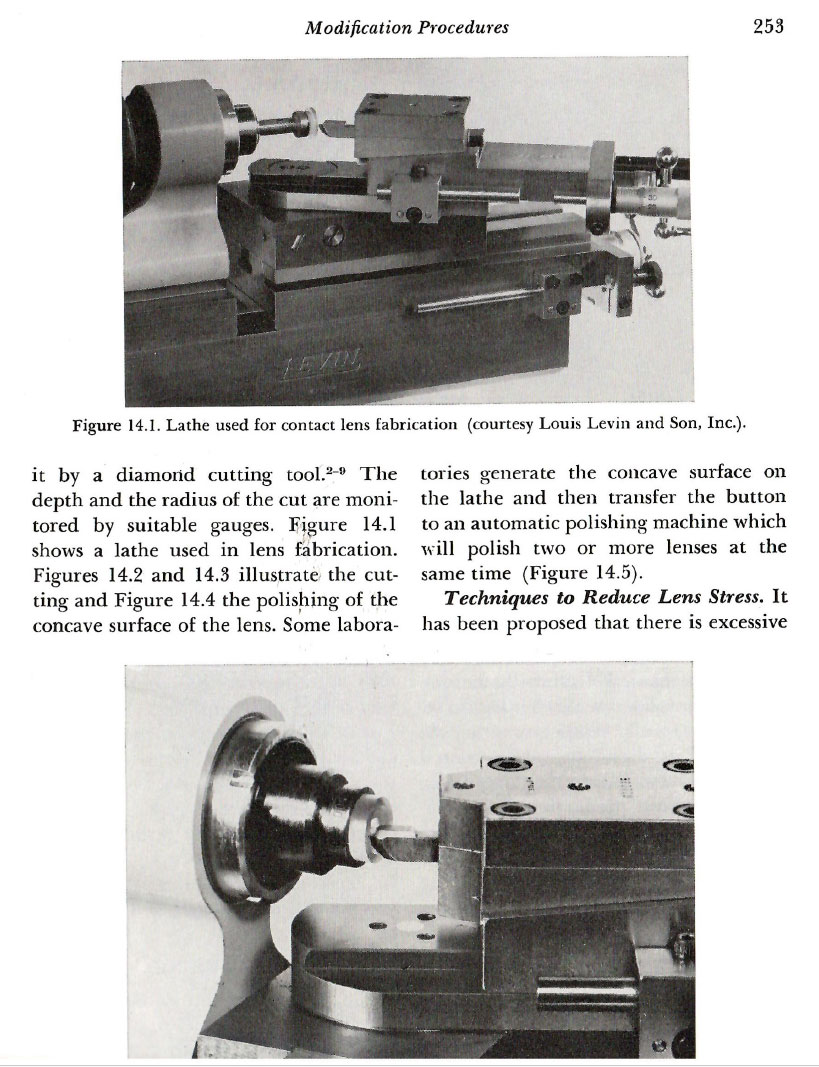
In 1958, when Robert Levin joined the firm, it had again expanded and was now located in new facilities at 3610 S. Broadway in Los Angeles. A new application for a special instrument lathe had presented itself. The manufacture of plastic corneal contact lenses was just beginning and these companies were searching for equipment that would enable them to produce such lenses. But each manufacturer closely guarded all information relating to their production methods. At about the time this industry was just beginning, the Levin factory had introduced a new attachment for their watchmakers lathes, a Ball Turning Rest.
Few firms were trying to use watchmakers lathes for cutting, mounting, and polishing these small, delicate, lenses. The Levins saw what appeared to be a reasonable market potential for machinery of the type they produced or could produce. However, virtually every one such businesses protected all information related to manufacturing technology under a thick veil of secrecy. The Levins thought the field looked interesting enough to explore and assigned Robert the task of developing a practical manufacturing process for plastic contact lenses and the specifications for the equipment that would be required to produce these lenses. Within a year Louis Levin & Son, Inc. published and distributed an instruction manual describing how to manufacture plastic contact lenses using the lathes and tooling then being produced by the company. In 1959, they also published the mathematical tables required to produce lenses of all sizes and focal lengths used for this purpose. These tables, the most complete available at the time, provided dimensional measurements for over 80,000 different prescriptions, representing over 120,000 solutions to what, at the time, were believed to every useful contact lens prescription. An IBM 705 computer was used to make these calculations. Robert Levin was responsible for developing the instruction booklet as well as the Contact Lens Tables.
With the free distribution of instructions showing how to manufacture plastic contact lenses, demand for Levin equipment described in the instruction booklet increased rapidly. The company responded to the demand by designing and producing machines specifically designed to cut and polish plastic contact lenses and provided instruction and training in the use of their products. Years later, these same machines were modified by others to enable them to machine sections of a frozen cornea. For a while, this became an accepted means to correct certain vision problems. The surgical procedure was referred to as “Radial Keratotomy” and was described in the news media at the time, along with pictures of the Levin equipment used for that application. Ultimately, this surgical procedure was replaced by a different surgical procedure.
Over time, designs and manufacturing methods changed to meet or exceed the increasingly tight tolerances required by industry. While the size of parts used in watches had gradually been decreasing, the industrial requirement to produce large quantities of even smaller, more precise and more difficult to produce parts was increasing. The company produced a special lathe having a headstock spindle error of less than 10 millionths of an inch. Today, that may not seem to be such an achievement; but at the time it was an extremely difficult task. This lathe was ordered by the U.S. Government through the normal competative bidding process. The bid requirements specified that the maximum allowable spindle error was not to exceed 10 millionths of an inch when tested using the method specified by the Government and the test equipment provided by the Government. The equipment and measuring techniques employed were the most accurate known at that time. What this meant was that if one placed a perfectly spherical ball in the spindle and then started the spindle rotating, a sensitive indicator measuring that ball anywhere on the ball would not indicate an error exceeding 0.0000010″ when one took the difference between the maximum reading and the minimum reading. Some idea of the difficulty of producing such a machine might be gained by knowing that Louis Levin & Son, Inc. was the only company in the United States to submit an unqualified bid. The geometric problems associated with building such a ball bearing spindle assembly were extremely complex and inspection equipment with the necessary sensitivity to accurately measure such errors had not as yet been invented. Moreover, the “master test ball” provided by the Government was not perfectly spherical. But using techniques passed down from the two preceding generations of Levins, Robert had the lathe constructed and he personally inspected and assembled and fitted each individual part.
When checked by the Government laboratory that ordered the machine, they advised Louis Levin & Son, Inc. that it met and exceeded all of the Government specifications. In fact, they advised that they were unable to detect any error whatsoever in the rotational accuracy of the headstock spindle. Some months later, however, they advised the factory that they finally succeeded in detecting an error in the spindle rotation. That error was stated to be well under 1 millionth of an inch, total indicator reading. When asked how they accomplished this feat of measurement, they replied that they invented and produced an “optical” measuring system for just that purpose. However, further inquiries disclosed that that the accuracy of their “optical” system could not be verified because no sufficiently accurate comparison standards were then available.
Louis Levin & Son produced special machines to micro-drill very small diameter holes of exceptional length and concentricity. One application was for a machine to drill a hole 0.013″ diameter down the center of a 4 inch long, 5/16″ diameter 416 Stainless Steel part. In this case, the hole had to be drilled from both ends, intersecting in the center. In terms of both the size and precision, industrial requirements now greatly exceeded anything demanded by horologists. The aerospace and electronics industries demand for equipment of the highest possible precision to produce the smallest of parts pushed the factory into the production of many special machine tools and components.
In December of 1962, Samuel Levin passed away quite unexpectedly. His son, Robert, assumed most of the administrative and operational responsibilities of the corporation. It was a difficult time. Robert now had the responsibility of taking care of his family, which now had 5 children, his mother, and Louis Levin & Son, Inc. Customers, employees, and family members were concerned about their future. Louis and Robert offered Donald Jaffe, the husband of Louis’s granddaughter Sylvia, the position of Treasurer. Donald was then an experienced C.P.A. He accepted the offer and continued in that position until 2 years after the firm was purchased by the G. L. Ohrstrom Company, of New York.
During the years that Robert directed the company, each of his 5 children, Nina, Robyn, Erik, Alison, and Michele had the opportunity to work in the factory during their school vacation periods. By the time the company was sold in 1984, all of Robert’s children had worked in the company at one time. Bob’s wife Renee, had also been employed to assemble electronic control units. It was truly a family business both in terms of the family members who had managed and worked there as well as with a great many of the non-family members who worked there.
In 1966, Louis Levin & Son, Inc. and the Tsugami Manfacturing Company of Japan entered into an agreement to introduce a new type of internal/external cylindrical grinder to the U.S. market. This machine was based upon a current model being produced by Tsugami; but contained Levin designed modifications that enabled the machine to grind smaller, more precise parts than had been possible previously. Production grinding of parts having diameters as small as 40 millionths of an inch became feasible. Levin spindle assemblies that turned round within less than 1 millionth of an inch, were being used in production machining and inspection applications. The industrial demand for Levin machine tools, machine tool component assemblies and tooling continued to increase while the demand for lathes and tools for the watchmaker and horologist had virtually disappeared. Toward the end of the 1970’s Louis Levin & Son, Inc. was producing lathes as fast as it could. Shortages of specially manufactured bearings and other items began to limit lathe production and the increasing demand for such equipment by the U.S. Government and its contractors only made matters worse. The company was shipping its products all over the world.